These two parks often appear in the same planning conversation, but they are genuinely different destinations in almost every way that matters: landscape, wildlife species, atmosphere, and the type of experience they produce. The comparison is less about which is better and more about which is right for your specific trip.
Here is what each one delivers and how to decide.
Wildlife
Masai Mara Wildlife
The Masai Mara is Kenya’s most wildlife-dense reserve. Open savannah supports one of the highest concentrations of predators anywhere on earth: lion prides, cheetah coalitions, and leopards sharing a relatively compact and accessible territory. The reserve holds the Big Five — lion, leopard, elephant, buffalo, and rhino (more reliably in the surrounding conservancies than the main reserve).
The Masai Mara’s defining seasonal event is the Great Migration: more than two million wildebeest, zebra, and Thomson’s gazelle moving between the Serengeti in Tanzania and the Masai Mara between July and October, with Mara River crossings as the centrepiece event.
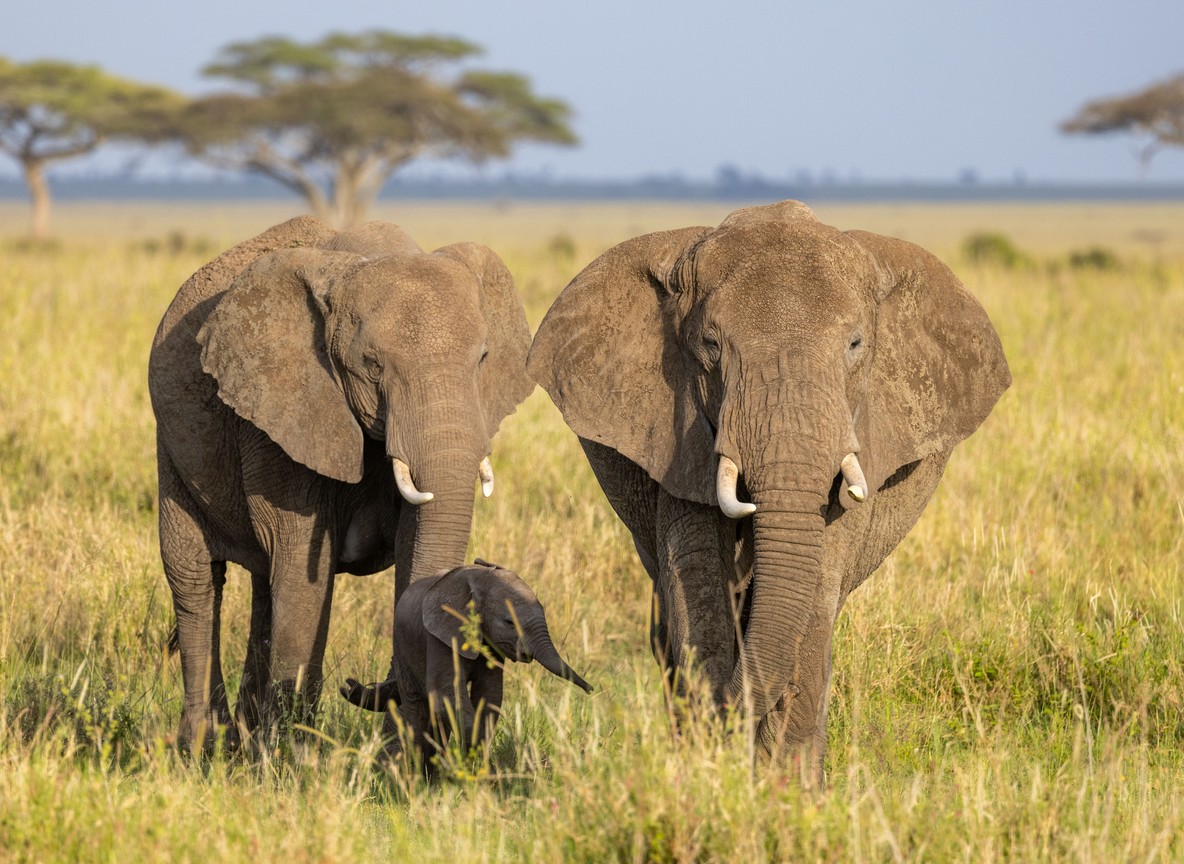
Year-round, the Mara holds large plains game herds, elephant families, hippo pods along the Mara and Talek rivers, and exceptional year-round birdlife.
Samburu Wildlife
Samburu‘s headline attraction is the Samburu Special Five: five species found in northern Kenya that do not exist in the Masai Mara or other southern reserves. These are:
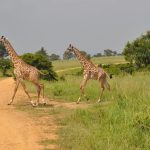
- Reticulated giraffe — more geometric in pattern than their southern counterparts
- Grevy’s zebra — larger, with narrow stripes
- Somali ostrich — with blue-grey skin tones distinct from common ostrich
- Beisa oryx — striking black-and-white markings
- Gerenuk — the long-necked antelope that stands on its hind legs to browse from acacia branches
Seeing these animals — particularly the gerenuk in that characteristic upright posture — is simply unavailable anywhere in the Masai Mara ecosystem.
Samburu also supports lion, leopard, cheetah, and elephant in strong numbers. The Ewaso Nyiro River that runs through the reserve attracts large elephant herds, crocodile, and hippo. Predator sightings are excellent, though generally less concentrated than in the Mara. There is no Great Migration in Samburu.
Wildlife Comparison Table
| Feature | Masai Mara | Samburu |
|---|---|---|
| Big Five | Yes (rhino limited in reserve) | Yes (rhino limited) |
| Great Migration | Yes (July to October) | No |
| Samburu Special Five | No | Yes |
| Predator density | Very high | High |
| Elephant herds | Large | Large (river-focused) |
| Birdlife | Excellent | Very good |
Scenery and Landscape
This is where the two parks diverge most dramatically.
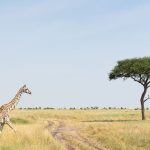
The Masai Mara is open, rolling savannah: golden grass plains extending to the horizon under wide African skies. The Siria Escarpment frames the western edge. The Mara and Talek rivers cut through riverine forest. It is the classic East Africa image — photogenic, familiar, and genuinely stunning.
Samburu is dramatically different. The reserve sits in semi-arid northern Kenya, framed by the Mathews and Isiolo ranges. The landscape is drier, more rugged: blue doum palm groves line the Ewaso Nyiro River, rocky terrain replaces open grass, and the light quality is distinctly northern Kenyan. Samburu feels wilder, more remote, and visually unlike anywhere else in the country.
Travellers who want the vast open plains and the classic big-sky savannah choose the Mara. Travellers who want a more dramatic, arid, and distinctively northern landscape often find Samburu more striking.
Best Time to Visit
Masai Mara: Peak season is July to October for the Great Migration. The short dry season (January to February) and long dry season (June to October) are both excellent for game viewing. Long rains (March to May) reduce visitor numbers significantly.
Samburu: Best year-round, with two dry seasons — January to February and June to October — providing the strongest wildlife viewing as animals concentrate along the Ewaso Nyiro River. Samburu receives less annual rainfall than the Mara and is less affected by seasonal softness on game drive tracks.
If the Great Migration is the goal, the Masai Mara in July to October is non-negotiable. For quiet, reliable game viewing with near-guaranteed Special Five sightings, Samburu is an excellent choice at almost any time of year.
Accessibility
Masai Mara: Approximately 270 km southwest of Nairobi — five to six hours by road or 45-60 minutes by scheduled bush flight from Wilson Airport.
Samburu: Approximately 340 km north of Nairobi — four to five hours by road via Nanyuki. Scheduled flights from Wilson Airport serve Samburu airstrip in around one hour. The road passes through Nanyuki and Isiolo, which is scenic in its own right.
Both reserves are reachable by road or air. Travellers combining both parks in a single itinerary typically fly between them rather than driving — the road journey from the Mara to Samburu takes a full day.
Accommodation
Masai Mara has more accommodation options than almost any other safari destination in East Africa: from budget campsites to ultra-luxury private conservancy camps. The range covers every budget level.
Samburu has fewer properties overall, but the quality is consistently strong. Key camps include Saruni Samburu, Elephant Bedroom Camp, Ashnil Samburu Camp, and Samburu Intrepids. Samburu leans toward mid-range and luxury with fewer genuine budget options than the Mara. The smaller number of camps means the reserve feels quieter and less commercialised.
Cost Comparison
The Masai Mara is a more competitive market: more operators, more camp choices, and a wider price range including genuine budget options. Samburu has fewer choices, which keeps average rates somewhat higher. Park fees are comparable between the two reserves.
For budget-conscious travellers, the Masai Mara typically offers more flexibility. For travellers prioritising exclusivity and fewer vehicles at sightings, Samburu often delivers better value even at similar price points — simply because there are fewer visitors overall.
Which Should You Choose?
Choose the Masai Mara if:
- The Great Migration and river crossings are on your must-see list
- You want the highest concentration of big cats and savannah predators
- You are visiting Kenya for the first time and want the classic experience
- You are travelling July to October when migration timing is ideal
- You need a wide range of accommodation options across budgets
Choose Samburu if:
- You want to see the Samburu Special Five
- You are a returning Kenya traveller wanting a different ecological experience
- You prefer a quieter, more remote atmosphere with fewer vehicles
- You are interested in the northern Kenya landscape and its distinct character
- You are combining Samburu with Mount Kenya, Laikipia, or Ol Pejeta
Combine both if:
- You have seven or more days and want maximum Kenya wildlife diversity
- You want migration-season Mara paired with a northern circuit
- You want to see both the classic southern savannah and the arid northern ecosystem on the same trip
Quick Comparison Table
| Factor | Masai Mara | Samburu |
|---|---|---|
| Great Migration | Yes (July to October) | No |
| Samburu Special Five | No | Yes |
| Scenery | Open savannah | Semi-arid northern landscape |
| Crowd levels | High in peak season | Low to moderate year-round |
| Accommodation range | Very wide | Mid-range to luxury |
| Best time to visit | July-October (peak), Jan-Feb | Jan-Feb, June-Oct |
| From Nairobi by air | 45-60 minutes | ~60 minutes |
| Budget options | Yes | Limited |
| Best combined with | Amboseli, Tsavo, Lake Nakuru | Ol Pejeta, Laikipia, Mount Kenya |
Explorer Notes: Combining Both Parks
A seven to ten-day Kenya itinerary that includes both the Masai Mara and Samburu is one of the most wildlife-rich combinations available in East Africa. A common structure:
- Days 1-4: Masai Mara (or a Masai Mara conservancy) for resident predators and, if timed correctly, migration
- Days 5-7: Fly to Samburu for the Special Five and northern Kenya landscape
- Day 8: Return to Nairobi
Flying between the parks rather than driving saves a full day of transfer time each way and is strongly recommended if the itinerary includes both.
Reader Next Steps
For how Samburu compares to other northern Kenya options, the Samburu vs Buffalo Springs vs Shaba guide covers the adjacent reserves. For the Masai Mara side of the decision, the Masai Mara reserve vs conservancy guide is the most useful pre-booking read for understanding where to base your stay.
Every trip described here can be tailored: dates, budget, camps, and pace built around you.
Get a Personalised Safari